Everyday Organizing Tips
Simple, realistic ways to create a calmer, more functional home.

You don’t need to organize your entire house at once. Small edits, simple systems, and giving your belongings clear homes can make everyday life feel easier.
Start where you are. Choose what feels manageable.
The goal isn’t perfection—it’s creating a home that works better for you.
1. Try a 10-Minute Reset
Choose one high-traffic area of your home and set a timer for ten minutes.
Clear the kitchen counters. Reset the living room. Put away what has collected by the front door.
A few minutes of resetting regularly can keep everyday clutter from becoming a much bigger project.
2. Start Small When You Feel Overwhelmed
When everything feels like too much, make the project smaller.
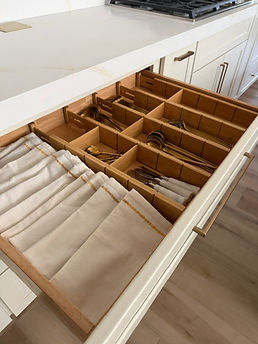
Choose one drawer, one shelf, one cabinet, or even one category. Finish that space before moving on.
Small wins build momentum—and progress is still progress.
3. Give Everything a Home
When something doesn’t have a clear place to go, it tends to move from surface to surface.
Keys. Mail. Backpacks. Shoes. Toys. Toiletries.
Create simple, easy-to-reach homes for the things you use most. The easier something is to put away, the more likely the system is to stick.
4. Make Your Closet Reflect the Life You Live Now
Pay attention to the clothes you actually reach for.
Your favorite and most frequently worn pieces should be the easiest to see and access. If your closet is crowded with things that no longer fit, feel good, or suit your current life, it may be time for an edit.
You don’t always need more closet space. Sometimes you simply need more room for what you actually love and wear.
See Our Closet Transformations →
5. Keep a Donation Bag Going
Decluttering doesn’t have to happen during one giant cleanout.
Keep a donation bag or bin somewhere convenient. When you come across clothing that no longer fits, toys your children have outgrown, or something you simply don’t use anymore, add it to the bag.
When it’s full, let it go.
6. Create Systems Around Your Real Life
The best organizing system isn’t necessarily the prettiest one.
It’s the one you’ll actually use.
If shoes always come off by the door, give them a home there. If backpacks land on the floor, add hooks where they naturally get dropped. If paperwork collects on the kitchen counter, create a simple place for incoming papers nearby.
Instead of fighting your habits, build systems around them.
7. Create Simple Pantry Zones
You don’t need dozens of matching containers to have an organized pantry.
Start by grouping similar things together—snacks, breakfast, baking, canned goods, dinner staples, and grab-and-go foods.
Bins can help contain loose categories, while labels make it easier for everyone in the household to know where things belong.
See Our Pantry Transformations →
8. Make Kids’ Systems Easy to Maintain
If a system is complicated for an adult, it’s probably too complicated for a child.
Keep categories broad and simple—books, dolls, cars, blocks, and art supplies. Use open bins, baskets, and low shelves so kids can easily see where things belong and help put them back.
And remember, sometimes the best organizing solution isn’t more storage—it’s simply having less to manage.
Read More: Why Less Is Often More: How Clutter Affects Children and What We Can Do About It →
9. Create a Landing Zone
Even a small entryway can work harder for your family.
Create designated spots for the things that enter and leave your home every day: shoes, bags, coats, keys, backpacks, and mail.
A few hooks, a basket, or a small tray can prevent these everyday items from spreading throughout the house.
10. Ask Better Decluttering Questions
When deciding what to keep, asking “Could I use this someday?” usually isn’t very helpful.
Instead, ask yourself:
• Do I use this?
• Do I love this?
• Would I buy this again today?
• Does this fit my life right now?
• Is keeping this worth the space it takes up?
• Would I miss it if it were gone?
You don’t have to get rid of everything. The goal is to become more intentional about what earns a place in your home.
11. Let Your Space Set the Limit
Sometimes the problem isn’t that you need another bin, shelf, or storage solution.
There may simply be more stuff than the space can comfortably hold.
Let the space help determine how much you keep. When drawers close easily, shelves aren’t overflowing, and there’s room to put things away, maintaining your home becomes much easier.
12. Choose Progress Over Perfection
A beautifully organized home still gets messy.
People live there.
The goal isn’t to keep every room picture-perfect. It’s to create systems that make it easier to reset when life happens.
Your home should support your routines, reduce everyday friction, and make life feel a little easier—not give you another standard to live up to.
See Real Before & After Transformations →
Need a Place to Start?
Choose one small space:
• A junk drawer
• Under the bathroom sink
• Your nightstand
• One pantry shelf
• Your car console
• One clothing category
Give yourself 15 minutes and see what you can accomplish.
You don’t have to do everything to make your home feel better.
Want Hands-On Help?
Sometimes you don’t need another organizing tip—you need someone beside you to help you make decisions, create a plan, and get it done.
Room to Bloom provides compassionate, judgment-free professional organizing, decluttering, downsizing, and moving support throughout the Lehigh Valley, Poconos, and surrounding communities.
Ready to create a home that feels easier to live in?