
Why Less Is Often More: How Clutter Affects Children and What We Can Do About It

Updated: Jun 18

As parents, we want to give our children every opportunity to learn, grow, and enjoy childhood. We carefully choose toys, books, games, art supplies, and activities that we hope will spark creativity and support their development.
But somewhere along the way, many families find themselves overwhelmed by the very things intended to help.
Toy bins overflow. Shelves are packed. Bedrooms become difficult to clean. Playrooms feel chaotic rather than inviting.
In a world that constantly encourages us to buy more, it can feel counterintuitive to believe that our children may actually benefit from having less.
Yet time and time again, we see that children often thrive when their spaces are simplified, their choices are reduced, and their belongings are thoughtfully curated.
The Hidden Impact of Clutter on Children

Children process their environments differently than adults.
While a room filled with toys may look exciting at first glance, it can also create visual noise. Bright colors, crowded shelves, overflowing bins, and endless choices compete for a child's attention.
Through our work with families, we've often observed that when children have fewer items competing for their attention, they tend to engage more deeply in play, focus more easily, and take greater ownership of their spaces.
Instead of becoming immersed in one activity, some children may bounce quickly from toy to toy, never fully settling into meaningful play.
When everything is available all at once, it can be difficult to decide where to begin.
For many children, especially those who are sensitive to sensory input or are still developing executive functioning skills, clutter can contribute to feelings of overwhelm without them even realizing it.
The result may look like:
Difficulty focusing on one activity
Increased frustration during cleanup
Trouble finding favorite items
Shorter attention spans during play
More frequent complaints of boredom despite having plenty of toys
Ironically, having more often leads to enjoying less.
Why Children Often Play Better with Fewer Toys
Think about what happens when children receive a brand-new toy.
For a while, that toy captures their full attention. They explore it, imagine with it, and engage deeply with it.
Now imagine that same toy sitting among hundreds of other options.
Its value gets lost in the crowd.
When children have fewer toys available at one time, they often become more creative with what they have. They invent games, create stories, and use items in new ways because they aren't constantly moving on to the next thing.
Simple toys frequently encourage the richest play.
Blocks become castles.
Blankets become forts.
Cardboard boxes become spaceships.
Children don't necessarily need more things to be creative. They often need more space for their imagination to work.
Take a look through our portfolio on kid spaces
Living in a Consumer-Driven World
Of course, this is easier said than done.

We live in a culture that constantly tells us more is better.
New toys arrive through birthday parties, holidays, school events, grandparents, well-meaning relatives, and targeted advertisements. Social media often showcases perfectly curated playrooms filled with products marketed as essential for development.
The message is everywhere:
Buy this.
Upgrade that.
Get one more thing.
But raising children isn't about keeping up with what everyone else has.
It's about helping them learn what truly adds value to their lives.
One of the greatest gifts we can give our children is helping them understand that happiness doesn't come from accumulating more possessions. It comes from experiences, relationships, creativity, confidence, and feeling at home in their environment.
A Reality We See in Family Homes
One of the things we see most often when working with families is that the clutter isn't usually the result of poor habits or a lack of effort. In fact, many parents are working incredibly hard to stay on top of it all.
Children's belongings tend to enter the home from every direction—birthdays, holidays, grandparents, school projects, classroom celebrations, sports teams, party favors, well-meaning friends, and everyday purchases made with the best intentions. Before long, even organized families can find themselves managing far more than they ever expected.
For parents, this often means more items to store, maintain, clean up, and make decisions about. It can feel overwhelming at first.
The good news is that it gets easier.
As families begin to thoughtfully edit what comes into their homes and regularly evaluate what is still being used, decision-making becomes more natural.


Over time, children learn these skills alongside their parents. They begin to understand that not every item needs to stay forever and that making space for what matters most is a healthy part of caring for their home.
The goal isn't to have less simply for the sake of having less. The goal is to create a home that feels peaceful, supportive, and manageable for the people living in it.
When there is less to maintain, less to clean up, and fewer decisions competing for our attention, there is often more room for connection, creativity, rest, and play.
Peace doesn't come from achieving a perfectly organized home. It comes from creating an environment that supports your family and reflects what matters most to you.
Teaching Children Organizational Skills Early
Organization is a life skill. Just like brushing teeth, making a bed, or learning to tie shoes, organizing can be taught gradually over time.
The goal isn't perfection.
The goal is helping children understand that everything has a home and that caring for their belongings is part of daily life.
Some simple ways to begin include:
Limit What Is Accessible
Children do not need every toy available all the time.
Consider rotating toys seasonally or storing some items away. When toys return weeks later, they often feel brand new again.
Create Clear Homes
Use simple bins, baskets, and labels that make sense for your child's age.
The easier it is to put something away, the more likely they are to do it.
Involve Them in Decluttering
Rather than secretly removing toys, invite children into the process.
Ask:
Which toys do you still play with?
Which toys have you outgrown?
Which toys could make another child happy?
These conversations help build decision-making skills and gratitude.
Focus on Progress, Not Perfection
Young children are learning. Cleanup will not always look the way adults envision.
Celebrate effort and consistency rather than expecting flawless results.
Model What You Want Them to Learn

Children learn far more from what they see than what they hear.
One thing I've learned in my own home is that children pay far more attention to what we do than what we say.
When I first began simplifying and organizing our home, I didn't start with my children's belongings. I started with my own. I decluttered my own spaces, let go of items I no longer used, and created systems that were easier to maintain.
Over time, my family began to observe both the process and the outcome. They saw that letting go of things wasn't something to fear. They saw that our home felt calmer, that it was easier to find what we needed, and that there was less to manage day to day.
Those observations naturally opened the door to conversations about their own belongings. Rather than forcing organization on them, they were able to see the benefits firsthand.
Children are always watching. When we model thoughtful decision-making and demonstrate that our possessions should support our lives—not overwhelm them—we help build skills and habits they can carry with them for years to come.
Decluttering as an Opportunity to Give Back
Another lesson children can learn through the decluttering process is generosity.
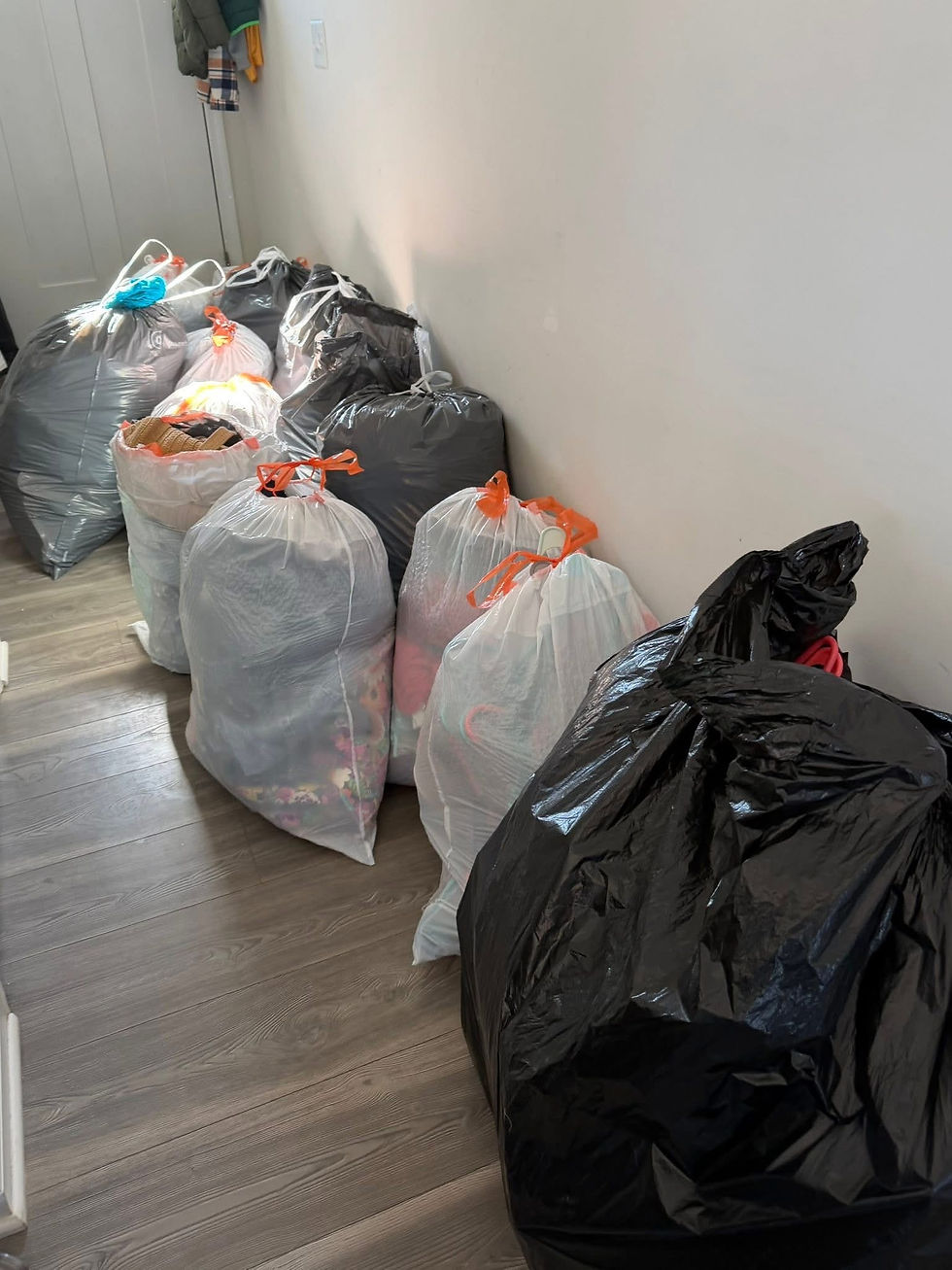
Many families are surprised to discover how much good can come from letting go of items that are no longer being used. Toys, books, clothing, and household items that have outgrown their purpose in one home can often make a meaningful difference in another.
There are so many individuals and families in our communities who can benefit from donations. Involving children in the donation process can help them understand that letting go isn't about waste—it's about passing something along to someone who may truly need or appreciate it.
If you're unsure where to donate, we've created a list of local organizations that accept a variety of household items, clothing, toys, and more. Be sure to visit our local donation guide for ideas and resources in our area.
Creating Space for What Matters Most
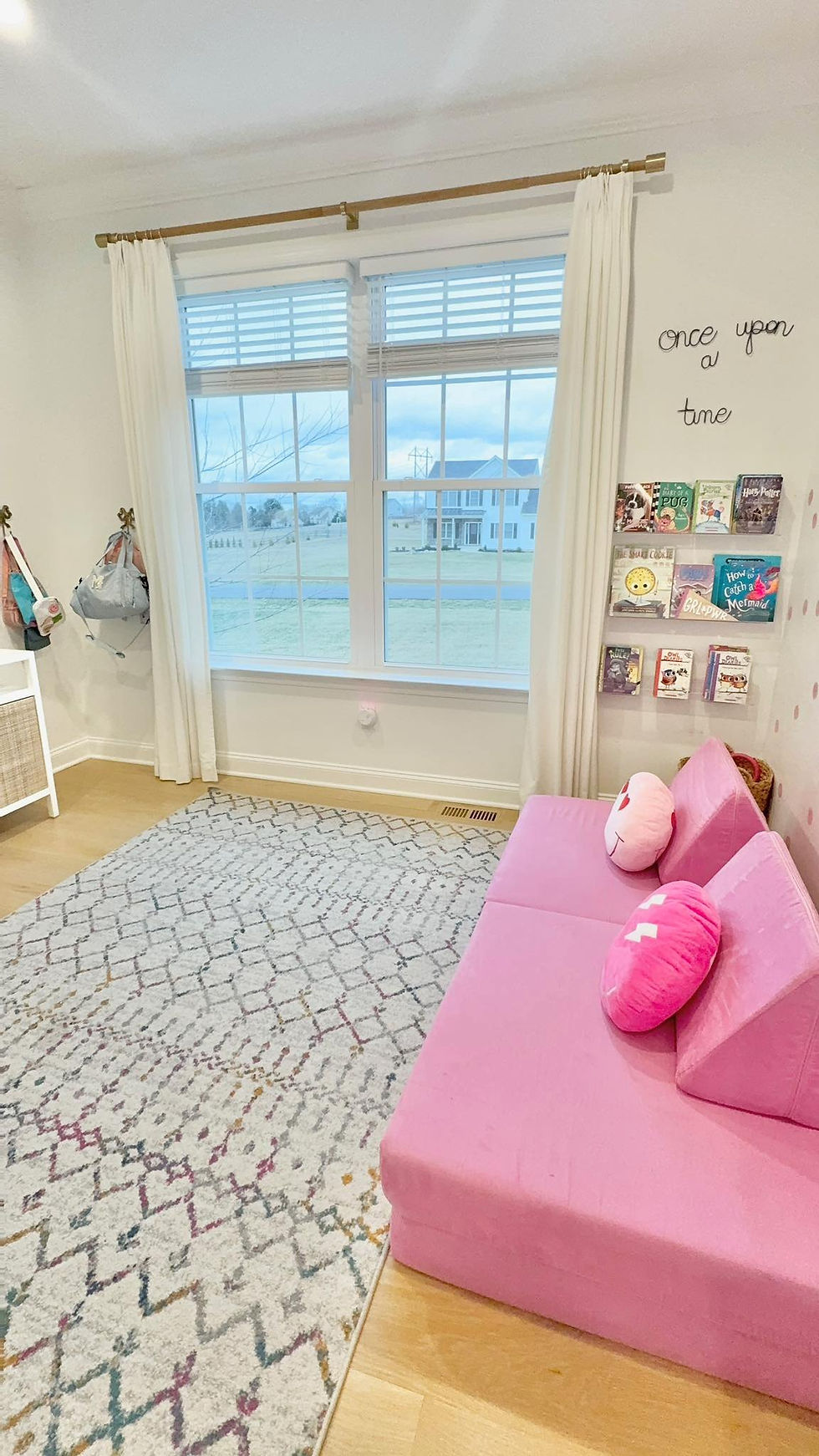
At Room to Bloom, we often remind families that organizing is not about creating a picture-perfect home. It's about creating a home that supports the people living in it.
For children, that means having enough space to play, create, learn, and rest without feeling overwhelmed by excess.
It means making room for imagination instead of clutter.
It means helping them develop lifelong habits that will serve them well long after childhood.
And perhaps most importantly, it means remembering that our children rarely need more things.
What they often need most is more space to learn, grow, connect, and simply be kids.
Ready to Create a More Peaceful Home?
If your child's bedroom, playroom, or shared family spaces are beginning to feel overwhelming, you don't have to tackle it alone.
Room to Bloom offers compassionate, judgment-free organizing services designed to help families simplify their homes, reduce stress, and create systems that are realistic to maintain.
Together, we'll create a home that feels calmer, functions better, and makes space for what matters most.
📍 Serving the Lehigh Valley, Poconos & Northeast New Jersey
📞 484-293-1063

About the Author
Krysta Kulesa is the Owner and Certified Professional Organizer at Room to Bloom, LLC. With a background in Interior Design and Behavioral Health Studies, she helps individuals and families create calm, functional, and supportive homes through a compassionate, judgment-free approach to organizing.
Krysta serves clients throughout the Lehigh Valley, Poconos, and Northeast New Jersey, helping them create spaces that feel peaceful, manageable, and aligned with their everyday lives.
© 2026 Room to Bloom, LLC. All rights reserved. This article may not be reproduced, distributed, or republished without written permission.


Comments